
A stem cell culture supernatant IV is a drip of the liquid that stem cells were grown in, collected after the cells themselves have been removed, so the product is cell-free by definition. Evidence for putting it into a vein is limited, its contents change from one maker to the next, and it carries the risks of any infusion. Ask what the vial is registered as before agreeing.
 Stem cell processing
Clinics in Korea
5 clinics for Stem cell therapy in Korea
| # | Clinic | Devices & products | Area | Languages | Listed price | Google rating |
|---|---|---|---|---|---|---|
| 1 | RE:BERRY Clinic Gangnam | Stem cell therapy · PRP · Rejuran Healer · Juvelook | Gangnam Station | English · 中文 · 日本語 · Español | ₩5,000,000 | 4.9 (1,165) |
| 2 | RE:BERRY Clinic Myeongdong | Stem cell therapy · Rejuran Healer · Juvelook · Re2O | Myeongdong Station | English · 中文 · 日本語 · Español | ₩4,000,000 | 4.9 (1,148) |
| 3 | Cellon Dermatology Clinic (Cheongdam) | Stem cell therapy · PRP · Rejuran Healer | Cheongdam Station | English · 中文 · 日本語 | - | - |
| 4 | Cellis LAB CLINIC | Stem cell therapy · PRP | Korea | - | - | - |
| 5 | ADO Clinic | Stem cell therapy · Rejuran Healer · Juvelook | Korea | - | ₩2,100,000 | 5.0 (681) |
 1
1. RE:BERRY Clinic Gangnam
★ 4.91,165 Google reviewsRE:BERRY Clinic Gangnam is a 2-minute walk from Gangnam Station Exit 10, a skin and aesthetic clinic with a 4.9 average from 1,165 Google reviews. Its menu covers stem cell therapy as well as HIFU lifting, RF lifting and Botox. Staff consult in English, Chinese, Japanese and Spanish, and stem cell therapy is listed from ₩5,000,000 + VAT.
Gangnam Station skin clinic built around five-language care
- Five-language desk
- Gallery-style interior
- Regenerative skin menu
- Location
- Gangnam Station (Line 2) Exit 10, 2 min walk
- Languages
- English · 中文 · 日本語 · Español
- Listed price
- From ₩5,000,000 + VAT
 2
2. RE:BERRY Clinic Myeongdong
★ 4.91,148 Google reviewsRE:BERRY Clinic Myeongdong is a skin and aesthetic clinic near Myeongdong Station, rated 4.9 from 1,148 Google reviews. Stem cell therapy is offered here together with HIFU lifting, RF lifting and Botox. Consultations are available in English, Chinese, Japanese and Spanish; its listed stem cell therapy price starts from ₩4,000,000 + VAT.
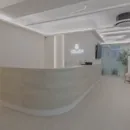
Myeongdong flagship for lifting, glass skin and stem cell
- Flagship space
- Open every day
- Six languages
- Location
- Myeongdong Station (Line 4) / Euljiro-ipgu Station (Line 2)
- Languages
- English · 中文 · 日本語 · Español
- Listed price
- From ₩4,000,000 + VAT
 3
3. Cellon Dermatology Clinic (Cheongdam)
Cellon Dermatology Clinic (Cheongdam) sits a 5-minute walk from Cheongdam Station, a skin and aesthetic clinic. It offers stem cell therapy alongside HIFU lifting, RF lifting and Botox. Consultations are available in English, Chinese and Japanese.
Stem cell and regenerative aesthetics clinic in Cheongdam
- Regenerative focus
- Cheongdam boutique
- Private rooms
- Location
- Cheongdam Station or Apgujeong Rodeo Station, about 5 minutes by taxi
- Languages
- English · 中文 · 日本語
 4
4. Cellis LAB CLINIC
Cellis LAB CLINIC runs a skin and aesthetic clinic in Korea. Stem cell therapy is on its menu.
Stem cell-based regenerative anti-aging clinic in Seocho
- Regenerative care
- In-house cell lab
- Hotel-suite recovery
- Location
- Korea
 5
5. ADO Clinic
★ 5.0681 Google reviewsADO Clinic is a skin and aesthetic clinic in Korea, rated 5.0 from 681 Google reviews. Stem cell therapy is offered here together with Botox, fillers and skin boosters. Its listed stem cell therapy price starts from ₩2,100,000 + VAT.
Filler- and lifting-led clinic near Sinnonhyeon Station
- Injectables & lifting
- Late weekday hours
- Station-front
- Location
- Korea
- Listed price
- From ₩2,100,000 + VAT
Guide
What clinics mean by culture supernatant
Stem cells kept alive in a laboratory sit in a nutrient liquid called culture medium. As they grow they release proteins, signaling molecules and tiny vesicles into it. The supernatant is what remains once the cells are spun or filtered out: used medium plus whatever the cells left behind. Menus also call it conditioned medium, culture fluid or secretome.
Two things follow. Nothing in the vial is alive, so this is not a cell treatment. And the contents are not fixed: tissue source, donor, medium recipe and length of culture all change the liquid, so one maker's product says little about another's.
Guide
How a drip differs from putting it on the skin
On Korean aesthetic menus, culture-derived products are generally cosmetics spread over skin that a needling device or laser has just opened. That is a local use. A drip is a whole-body use: everything in the bag enters the bloodstream directly.
The route changes what the product must be. A liquid for a vein has to be made, tested and labeled as an injectable, with each batch shown to be sterile and free of fever-causing contaminants. A cosmetic registration covers the skin only. Regulatory status differs by country and by product, so ask what the vial is registered as, and for which route.
| Point | Applied to skin | Given through a vein |
|---|---|---|
| Where it goes | One treated area of skin | The bloodstream, then the whole body |
| What the product must be | Registered and labeled for skin use | Made, tested and labeled for injection |
| If a reaction occurs | Usually limited to the treated skin | Can involve the whole body and needs trained staff nearby |
Guide
How much evidence exists for use through a vein
Evidence for giving culture supernatant intravenously is limited. Published human experience with this route is sparse, and there is no agreed composition, dose or schedule. Laboratory findings explain the research interest; they do not show what a drip does in a person.
Papers on cell therapy do not fill the gap. A 2016 systematic review and meta-analysis by Yim and colleagues in Cytotherapy, for example, addressed the safety of mesenchymal stem cell therapy, meaning treatment with the cells themselves. A cell-free liquid is a different product, so citing cell research for a supernatant drip borrows evidence from something else.
Writing in Stem Cell Reports in 2021, Master and colleagues described unproven stem cell interventions as a global public health problem. Read any promise that a drip treats, prevents or reverses a condition as a claim without that kind of support.
Guide
Infusion risks that apply to any drip
Some risks come from the line itself, whatever the bag holds.
A culture-derived liquid adds unknowns of its own: how the donor tissue was screened, whether traces of the culture recipe remain, and how far one batch differs from the next.
- Bruising, soreness or a tender, irritated vein where the cannula went in
- Fluid leaking into nearby tissue, with swelling and stinging
- Feeling faint, sweaty or nauseous during or just after the drip
- Flushing, itching, hives, chills or fever as an infusion reaction
- Rarely, a severe allergic reaction with breathing difficulty
- Infection, if the product, the bag or the line is not sterile
Guide
Questions to ask before a stem cell culture supernatant IV
Send these in writing before you travel and keep the replies.
- What is the product called, and which company made it?
- What is it registered as, in which country, and for which route?
- Which tissue were the cells grown from, and how was the donor screened?
- Who processed the liquid, and may I see the batch test record?
- What else goes into the bag, such as saline or vitamins?
- Who places the cannula, and how long am I observed afterward?
- Whom do I contact, and how, if I feel unwell after flying home?
Evidence
Research behind this page
- Safety of Mesenchymal Stem Cell Therapy: A Systematic Review and Meta-AnalysisCytotherapy · 2016 · doi:10.1016/j.jcyt.2016.03.258
A systematic review and meta-analysis on the safety of mesenchymal stem cell therapy; it concerns cells, not cell-free culture liquid.
- Unproven stem cell interventions: A global public health problem requiring global deliberationStem Cell Reports · 2021 · doi:10.1016/j.stemcr.2021.05.004
A paper that frames unproven stem cell interventions as a global public health problem requiring global deliberation.
FAQ
Questions about Stem cell therapy in Korea
Which clinics offer Stem cell therapy in Korea?
Clinics offering Stem cell therapy in Korea include RE:BERRY Clinic Gangnam (Gangnam Station), RE:BERRY Clinic Myeongdong (Myeongdong Station), Cellon Dermatology Clinic (Cheongdam) (Cheongdam Station), Cellis LAB CLINIC (Korea) and ADO Clinic (Korea). Each lists Stem cell therapy on its own menu; message the clinic directly to confirm the doctor, product and current price.
Does a culture supernatant drip contain living stem cells?
No, a culture supernatant is the liquid left after the cells have been separated out, so no living stem cells should be in the vial. What remains is used culture medium together with proteins and vesicles the cells released while growing. The words stem cell on the menu describe where the liquid came from, not what enters your vein. Ask the clinic to state that in writing.
Is culture supernatant the same thing as an exosome product?
Not exactly; exosomes are one ingredient of the supernatant, while the supernatant is the whole liquid. Exosomes are tiny vesicles that cells release, and some makers concentrate or isolate them. A supernatant keeps the other secreted proteins and the leftover medium as well. Menus often blur the two terms, so ask whether the vial holds the full liquid or a purified fraction.
Can the vial used in a skin session also go into a drip?
Do not assume so, because a product made and registered for the skin has not been made or tested for a vein. Injectable liquids need batch-by-batch proof of sterility and of freedom from fever-causing contaminants, which a cosmetic label does not provide. If a clinic proposes running a skin ampoule through a drip line, ask for the registration document that covers intravenous use.
What is realistic to expect from a supernatant infusion?
No specific outcome can be promised, since evidence for giving culture supernatant through a vein is limited. Claims about energy, recovery, immunity or looking younger are marketing language, not established effects, and nobody can predict a response for one individual. A fair consultation says this plainly. If your goal is skin quality, ask whether a surface treatment with a named product is the more usual route.
Who should be especially careful about a cell-derived drip?
Anyone who is pregnant or breastfeeding, has had a severe allergic reaction, or has an active infection or fever should hold off and speak with a doctor first. The same applies to people with heart or kidney disease, a clotting disorder, or a current or past cancer diagnosis, who should involve their own specialist. Bring a full list of medicines and supplements to the consultation.
Can I fly home right after a supernatant drip?
That decision belongs to the treating doctor, and it is sensible not to plan a flight straight from the drip chair. Infusion reactions such as fever, chills or a rash can appear in the hours after the line comes out, and they are easier to deal with near the clinic than in the air. Leave a margin in your itinerary and carry the written product record in your hand luggage.