Korea stem cell treatments at aesthetic clinics fall into three legal categories, and this page lets you compare 5 clinics, check listed prices and work out which category a menu item belongs to. Most programs use cell-free products made from stem cell culture, spread over skin that microneedling or a laser has just opened. Others concentrate the patient's own blood plasma, which holds no stem cells.
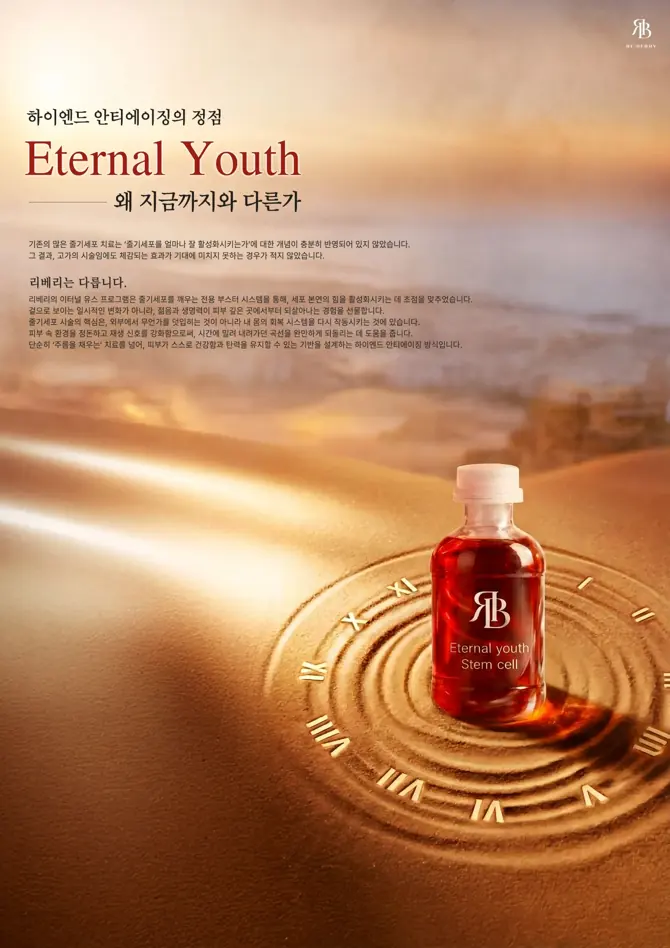 Stem cell processing
Clinics in Korea
5 clinics for Stem cell therapy in Korea
| # | Clinic | Devices & products | Area | Languages | Listed price | Google rating |
|---|---|---|---|---|---|---|
| 1 | RE:BERRY Clinic Gangnam | Stem cell therapy · PRP · Rejuran Healer · Juvelook | Gangnam Station | English · 中文 · 日本語 · Español | ₩5,000,000 | 4.9 (1,155) |
| 2 | RE:BERRY Clinic Myeongdong | Stem cell therapy · Rejuran Healer · Juvelook · Re2O | Myeongdong Station | English · 中文 · 日本語 · Español | ₩4,000,000 | 4.9 (1,091) |
| 3 | Cellon Dermatology Clinic (Cheongdam) | Stem cell therapy · PRP · Rejuran Healer | Cheongdam Station | English · 中文 · 日本語 | - | - |
| 4 | Cellis LAB CLINIC | Stem cell therapy · PRP | Korea | - | - | - |
| 5 | ADO Clinic | Stem cell therapy · Rejuran Healer · Juvelook | Korea | - | ₩2,100,000 | 5.0 (659) |
 1
1. RE:BERRY Clinic Gangnam
★ 4.91,155 Google reviewsRE:BERRY Clinic Gangnam is a 2-minute walk from Gangnam Station Exit 10, a skin and aesthetic clinic with a 4.9 average from 1,155 Google reviews. Its menu covers stem cell therapy as well as HIFU lifting, RF lifting and Botox. Staff consult in English, Chinese, Japanese and Spanish, and stem cell therapy is listed from ₩5,000,000 + VAT.
Gangnam Station skin clinic built around five-language care
- Five-language desk
- Gallery-style interior
- Regenerative skin menu
- Location
- Gangnam Station (Line 2) Exit 10, 2 min walk
- Languages
- English · 中文 · 日本語 · Español
- Listed price
- From ₩5,000,000 + VAT
 2
2. RE:BERRY Clinic Myeongdong
★ 4.91,091 Google reviewsRE:BERRY Clinic Myeongdong is a skin and aesthetic clinic near Myeongdong Station, rated 4.9 from 1,091 Google reviews. Stem cell therapy is offered here together with HIFU lifting, RF lifting and Botox. Consultations are available in English, Chinese, Japanese and Spanish; its listed stem cell therapy price starts from ₩4,000,000 + VAT.
Myeongdong flagship for lifting, glass skin and stem cell
- Flagship space
- Open every day
- Six languages
- Location
- Myeongdong Station (Line 4) / Euljiro-ipgu Station (Line 2)
- Languages
- English · 中文 · 日本語 · Español
- Listed price
- From ₩4,000,000 + VAT
 3
3. Cellon Dermatology Clinic (Cheongdam)
Cellon Dermatology Clinic (Cheongdam) sits a 5-minute walk from Cheongdam Station, a skin and aesthetic clinic. It offers stem cell therapy alongside HIFU lifting, RF lifting and Botox. Consultations are available in English, Chinese and Japanese.
Stem cell and regenerative aesthetics clinic in Cheongdam
- Regenerative focus
- Cheongdam boutique
- Private rooms
- Location
- Cheongdam Station or Apgujeong Rodeo Station, about 5 minutes by taxi
- Languages
- English · 中文 · 日本語
 4
4. Cellis LAB CLINIC
Cellis LAB CLINIC runs a skin and aesthetic clinic in Korea. Stem cell therapy is on its menu.
Stem cell-based regenerative anti-aging clinic in Seocho
- Regenerative care
- In-house cell lab
- Hotel-suite recovery
- Location
- Korea
 5
5. ADO Clinic
★ 5.0659 Google reviewsADO Clinic is a skin and aesthetic clinic in Korea, rated 5.0 from 659 Google reviews. Stem cell therapy is offered here together with Botox, fillers and skin boosters. Its listed stem cell therapy price starts from ₩2,100,000 + VAT.
Filler- and lifting-led clinic near Sinnonhyeon Station
- Injectables & lifting
- Late weekday hours
- Station-front
- Location
- Korea
- Listed price
- From ₩2,100,000 + VAT
Guide
Three legal categories behind one label
The phrase stem cell in Korea covers products with very different legal standing, so the first useful question is what a program actually contains rather than how impressive it sounds. Korean rules separate cosmetic ingredients, procedures prepared from a patient's own blood, and therapies that use processed human cells. Each category has its own oversight, and that difference decides where and how a treatment may be given.
Exosome ampoules supplied to clinics are registered as cosmetics, not as approved medicines. That status shapes the method: the product goes onto the skin straight after a device has opened fine channels, and Korean health authorities have told clinics not to push cosmetic products into the skin with a syringe. Cultured or processed cell therapy belongs to the national framework for advanced regenerative medicine, where a treatment plan needs government review and may run only at designated medical institutions. A walk-in aesthetic visit is therefore almost always one of the first two categories.
| Category | What it contains | Standing in Korea | Where visitors meet it |
|---|---|---|---|
| Cell-free culture products | Growth factors and vesicles collected from cultured stem cells, no living cells | Sold as cosmetic ingredients | Applied after microneedling, RF microneedling or fractional laser |
| Own-blood plasma programs | Platelets and plasma concentrated from a small blood draw | Prepared on site as a medical procedure | Face or neck work at aesthetic clinics |
| Processed living cell therapy | Cells harvested, processed and returned to the patient | Separate regenerative medicine law with government review | Designated medical institutions only |
Guide
Reading a Korean clinic menu before you commit
Menus rarely use the legal categories above. Instead you will see names such as stem cell booster, cell-derived ampoule, regenerative program or simply exosome, often bundled with a device name. People searching for South Korea stem cell options from abroad tend to assume the word means living cells; on an aesthetic menu it usually describes where an ingredient came from, not what goes into the body.
A short set of questions sorts most programs within minutes. Ask them at the consultation and expect plain answers; a clinic that cannot name its product or its maker gives you a reason to keep looking. The clinic list on this page lets you compare how each clinic describes its program before you message anyone.
- Which product is used, and which company makes it?
- Is it registered as a cosmetic and spread on the surface?
- Does the program use my blood, a culture product, or both?
- Which device opens the skin, and to what depth?
- What is included in the quote, and is it shown before VAT?
- What should I avoid in the first days afterward?
Guide
What published research supports, and where it stops
The idea behind cell-free products is that stem cells release signaling proteins and tiny vesicles into the fluid they grow in. In a 2008 paper in Dermatologic Surgery, Park and colleagues analyzed the factors secreted by adipose-derived stem cells and described laboratory and animal findings suggesting these factors could support collagen production. That work explains the rationale; it did not test a finished cosmetic product on large groups of people.
Human data remain thin. Most published reports on finished skin products are small, short and run without a comparison group, and many involve a single product applied after a device session, so the device and the product are hard to separate. Products also differ in source cells, concentration and processing, which means a result reported for one ampoule says little about another sold under a similar name. Read such reports as signs of feasibility rather than proof.
Taken together, the evidence supports modest, gradual change in texture or calm skin for some people, mostly when paired with a device. It does not support claims of reversed aging, organ repair or lasting regeneration, and results vary from person to person.
Guide
Fitting a session into a trip to Korea
Most cell-free and plasma programs take part of a day, including numbing time, and leave the face pink rather than visibly wounded. A same-day flight home is generally possible, but redness, pinpoint marks or, after fractional laser, fine crusting can last from hours to about a week. Book photos, weddings or meetings with that window in mind, and place the session early in the trip if a follow-up check matters to you.
Bring a written list of your medicines, recent peels, laser work and retinoid use, plus any history of cold sores or keloids. After treatment, skip saunas, swimming pools, hard exercise and alcohol for the first day or two, and use a broad-spectrum sunscreen once the surface has closed. Ask for aftercare in writing in a language you read comfortably.
Clinics quote per session or per package, and the price table on this page shows listed amounts before 10% VAT is added at payment.
Guide
Who should wait, and side effects to plan for
These programs are not appropriate during pregnancy or breastfeeding, over active acne, infection, an eczema flare or open wounds, or soon after isotretinoin. People who form keloids, take blood thinners or have a bleeding disorder need a careful discussion first, especially before a blood draw. Anyone expecting a lift, new volume or the removal of deep scars should look at other treatments.
Expected effects are short-lived and come mainly from the device step. Rare problems need a doctor's review rather than waiting it out.
- Redness, warmth and mild swelling for hours to a few days
- Pinpoint marks, dryness or itching as the skin settles
- A small bruise at the draw site for plasma programs
- Breakouts in skin prone to acne
- Rarely, infection, pigment change or delayed lumps
- No effect on sagging, lost volume or deep scarring
Guides
Guides on this site
Evidence
Research behind this page
- Adipose-Derived Stem Cells and Their Secretory Factors as a Promising Therapy for Skin AgingDermatologic Surgery · 2008 · doi:10.1111/j.1524-4725.2008.34283.x
A paper describing the growth factors secreted by adipose-derived stem cells and laboratory and animal evidence that they may support collagen production in aging skin.
FAQ
Questions about Stem cell therapy in Korea
Which clinics offer Stem cell therapy in Korea?
Clinics offering Stem cell therapy in Korea include RE:BERRY Clinic Gangnam (Gangnam Station), RE:BERRY Clinic Myeongdong (Myeongdong Station), Cellon Dermatology Clinic (Cheongdam) (Cheongdam Station), Cellis LAB CLINIC (Korea) and ADO Clinic (Korea). Each lists Stem cell therapy on its own menu; message the clinic directly to confirm the doctor, product and current price.
Do Korean aesthetic clinics use living stem cells?
In almost all cases, no; aesthetic menus use cell-free culture products or the patient's own blood plasma instead of living cells. Therapy with harvested and processed cells is governed by a separate regenerative medicine law that requires government review and limits it to designated institutions. When a menu says stem cell, ask whether it means a culture-derived ingredient, a plasma program or something else, and get the answer in writing.
Is stem cell treatment legal in South Korea?
Yes, within clear limits that depend on the category of treatment. Cosmetic culture products may be applied to the skin, plasma prepared from your own blood may be used as a medical procedure, and processed cell therapy must pass a government review and run at designated medical institutions. A program that blurs these lines, for example by injecting a cosmetic ampoule with a syringe, conflicts with guidance from Korean health authorities.
Are exosome ampoules approved as medicines in Korea?
No, exosome products used at aesthetic clinics are registered as cosmetics rather than approved drugs. That is why clinics apply them to skin opened by microneedling, RF microneedling or a fractional laser instead of injecting them. A cosmetic registration says the product may be sold for topical use; it is not a regulator's judgment that it treats any condition, so treat strong efficacy claims with caution.
Does a plasma program made from my blood count as stem cell therapy?
Not in a strict sense, because concentrated plasma contains platelets and growth factors but no stem cells. The clinic draws a small amount of blood, spins it in a centrifuge and uses the plasma layer, sometimes with an added booster. Some menus still group these programs with stem cell care. Ask what is added to the plasma and how it is delivered so you know exactly what you are paying for.
How strong is the evidence for cell-derived skin products?
The evidence is early and mostly small, so expect a possible modest change rather than a predictable outcome. Much of the work is laboratory or animal research, such as the 2008 Dermatologic Surgery paper by Park and colleagues, and human studies tend to be short case series or single trials. Results vary from person to person, and a clinic should say so plainly at the consultation.
How can I tell which category a clinic's program belongs to?
Ask for the product name, the maker and whether the product is registered as a cosmetic before you agree to treatment. Then ask whether your blood is drawn and which device opens the skin. Those three answers place almost any program in one of the three categories. A clinic that cannot show the sealed product, or describes it only as secret or proprietary, has not given you enough information to decide.
Can I fly home the day after a session?
Usually yes; these programs are non-surgical and a flight the same day or the next day is generally possible. Redness and pinpoint marks may still show, and fine crusting after fractional laser can take up to about a week to clear. Keep the skin clean during the flight, use a gentle moisturizer and avoid makeup until the treating doctor says the surface has closed.
Who should not have these treatments?
Pregnant or breastfeeding people, and anyone with active infection, an acne or eczema flare on the area, should wait. Recent isotretinoin use, a tendency to keloids, blood thinners or a bleeding disorder call for a detailed talk with the doctor first. People who want lifting, volume or deep scar removal will usually be better served by a different treatment, and an honest consultation will say that.
Is VAT included in the amounts clinics list?
Listed amounts are normally shown before VAT, and 10% VAT is added at payment. Check whether a quote covers numbing, the device pass, the product and any aftercare items, since packages differ in what they bundle. Ask for an itemized receipt, and confirm whether a package must be used within a set period or on one visit. Ask the clinic to note the VAT line separately on the quote.
Will a clinic explain aftercare in a language I understand?
Many clinics that see international visitors offer interpretation or written aftercare in English, but the level of support differs. Ask before the visit which languages are covered at the consultation and whether instructions come in writing. Written notes matter most for what to avoid in the first days, which products to use afterward and when to contact the clinic if redness or swelling does not settle.