Editorial Picks
How to Choose a Stem Cell, Exosome & Regenerative Clinic in Hongdae — 2026 Guide
Hongdae arrives differently than Gangnam. The trains from Incheon Airport empty out at the regional anchorand Hongik University by mid-afternoon, and the demographic that steps onto Yanghwa-ro is younger, more often on a student visa or a working-holiday programme, more likely to be travelling on a budget written in dollars or yen or pounds rather than on a corporate card. Regenerative medicine — exosomes, autologous stem cell therapies, PDLLA biostimulators, polynucleotide skin repair — has historically clustered in Cheongdam and Apgujeong, where the clinics read like private banks. The interesting development of the last two years is that Hongdae now hosts a regenerative practice substantial enough to anchor a list of its own: a leading regional regenerative practice, the the regional anchor, registered with KHIDI as a foreign-patient-attracting medical institution. The seven Korea-wide practices that follow are read alongside it, not against it — the visitor arriving from JFK, LAX, or LHR for a five-day window benefits from understanding which house in which neighbourhood suits her particular indication.
What to look for in a stem cell, exosome, or regenerative clinic
A regenerative protocol — stem cell, exosome, or PDLLA-class — rests on four quiet considerations a senior coordinator should be able to discuss without consulting a binder. The first is provenance: the biologic itself must be sourced through a regulated supply chain, with batch and lot numbers traceable to the manufacturer's certificate of analysis. A clinic that hesitates when asked to photograph the vial before reconstitution is one to leave. The second is the named injector: Korean medical law requires a licensed physician to administer regenerative biologics, and what separates competent houses from memorable ones is whether the operating physician's name appears on the consent and on the injection record — not merely on the lobby wall. The third is the indication: regenerative medicine works categorically differently for skin texture, hair regrowth, orthopaedic repair, and systemic anti-ageing, and a house that walks the patient into a printed regimen without first asking what the indication is for is one to read carefully. The fourth is the follow-up review: stem cell and exosome outcomes are graduated rather than immediate, and a senior practice schedules the patient back at week four for imaging and a candid conversation before booking the next session. International patients should weigh, in addition, multilingual aftercare reachable in writing after the flight home, and a written refund and deposit policy in the patient's own language.
Reone Dermatology (Cheongdam)
Reone is a Cheongdam dermatology practice running Rejuran, exosome boosters, and PDLLA-class biostimulators within a sequenced anti-ageing menu. The consultation pacing leans toward written week-four follow-up rather than same-day add-ons, and the clinic is recognisable to returning patients from Japan and Taiwan for its long-form discussion style.
Eight Korea regenerative clinics worth a closer reading from a Hongdae base
What follows is an editorial discovery — not a ranking. Each entry has been read for the texture of its practice rather than its marketing. The order reflects the rhythm of an unhurried walk west to east — from Hongdae's the regional anchor outward toward Sinsa, Apgujeong, and Cheongdam, with one Tokyo-and-Osaka-linked house folded in for the patient considering a multi-city circuit.
QD Skin Clinic (Gangnam) 💬
QD is a Gangnam practice whose medical lead, Dr. Hong Sahyeok, holds an MD-PhD and a fellowship at Harvard Medical School and Johns Hopkins Hospital. Exosome regeneration and scalp stem cell protocols sit within a menu also covering Rejuran, Juvelook, and Skinvive. Membership across seven Korean medical societies underwrites the academic register of the consultation.
Laurel Clinic (Cheongdam) 💬
Laurel is a Gangnam house running a three-layer booster regimen folding NCTF135HA, Skinvive, Rejuran, Juvelook, and exosome into a sequenced protocol. Director Dr. Joon-hyuk Hur chairs the Korean Lifting Research Society with more than a decade of facial lifting experience. The practice claims Korea's highest monthly Ultanium volume — over one hundred procedures.
Lijin Clinic (Myeongdong)
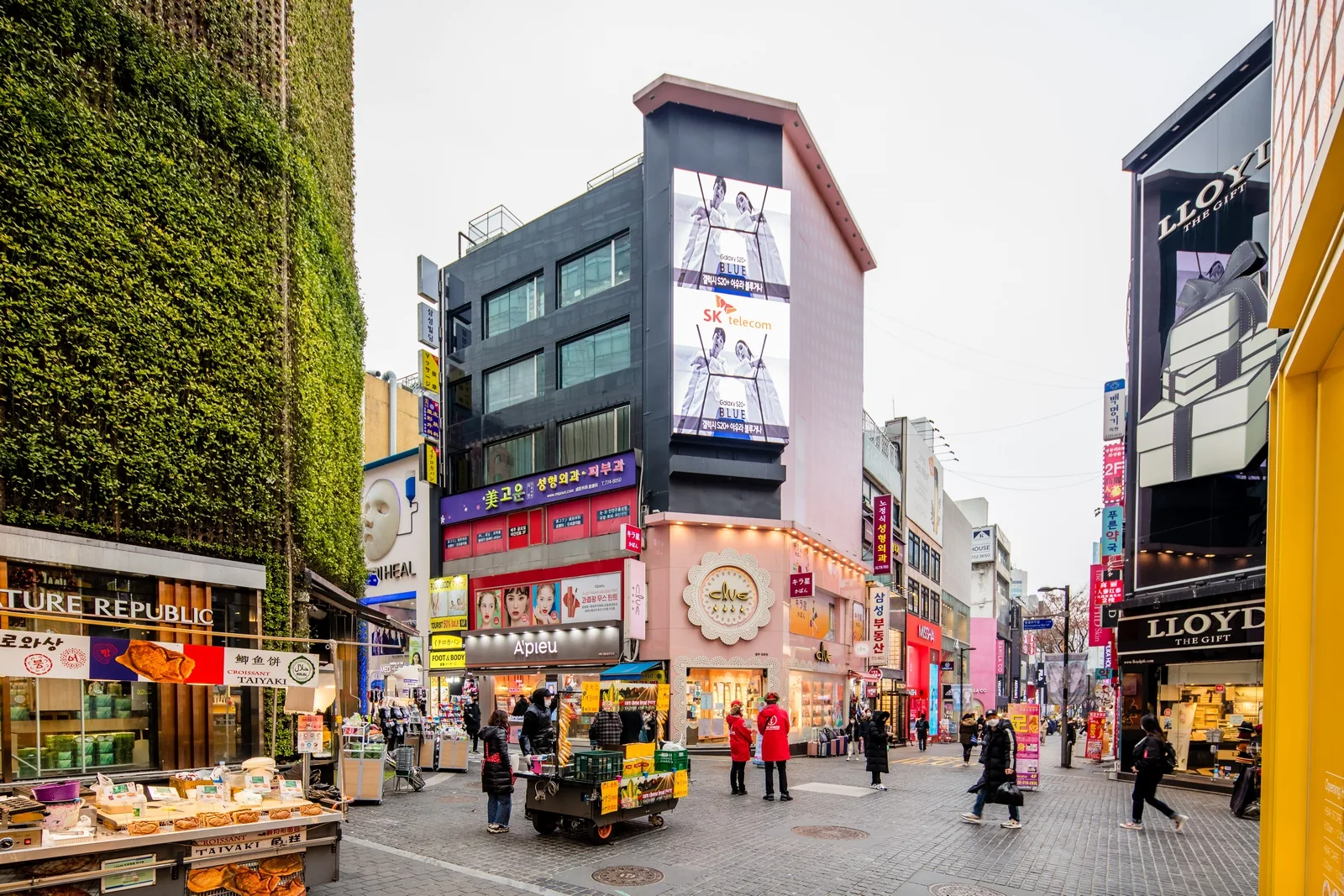
Lijin is a Myeongdong practice that has treated international patients since 2011, with Dr. Hwang as chief director carrying fifteen years of expertise in regenerative boosters. The clinic is a recognisable name among returning English-speaking patients, and the operating temperament leans long-form: longer consultations, fewer same-day add-ons, and a deliberate pace through the booster regimen. International coordinator support is available.
Lienjang Clinic (Gangnam) 💬
Lienjang has operated since 2004 and runs Rejuran Healer, Lumivion, and exosome skin boosters within its regenerative menu, with a dedicated resident anaesthesiologist on site for sedation cases. Multiple branches in Tokyo and Osaka suit the patient considering a multi-city Asian circuit. The English-language coordinator typically replies within hours rather than days.
BLS Clinic Main Branch (Cheongdam)
BLS is a Seoul practice with more than eighteen years of operation, hosting the Volume Forum and Volume Master Forum academic conferences on aesthetic and regenerative work. Stem cell fat grafting and hair regeneration sit within a broader menu covering Rejuran and exosome skin boosters. Four named doctors are credited, with appearances on MBC and SBS.
Ever Skin Clinic Apgujeong 💬
Ever is an Apgujeong board-certified dermatology practice claiming top two per cent of Korean physicians, recognised twice in a single year — June and November — as one of eight outstanding-satisfaction clinics among 179 Gangnam dermatology houses. Rejuran and exosome skin rejuvenation sit within a tightly edited menu. The consultation register reads diagnostic rather than transactional.
Egg Clinic (Sinsa)
Egg is a Cheongdam aesthetic dermatology practice staffed by eight board-certified doctors, with stem cell therapy alongside Rejuran, Juvelook, and PDRN boosters in a sequenced anti-ageing menu. Multiple Korean medical society memberships underwrite the practice; the international caseload is steady rather than aggressive. English-language consultation is available, with booking lead time generally two to three weeks during peak months.
What stem cell, exosome, and regenerative treatment actually is
Regenerative medicine in the Korean aesthetic and dermatology register encompasses several categorically distinct mechanisms that international patients often conflate, and the distinctions matter for both indication and regulatory pathway. Autologous stem cell therapy uses the patient's own mesenchymal cells — typically harvested from adipose tissue — processed and reintroduced for tissue regeneration, hair regrowth, or systemic anti-ageing protocols delivered intravenously. Exosomes are nanoscale vesicles secreted by stem cells, used topically through microneedling channels or by direct microinjection to deliver growth-factor signalling without the cells themselves; the regulatory pathway is distinct from cell therapy and the cost profile is meaningfully lower. PDLLA-class biostimulators — Juvelook, Sculptra — are poly-D,L-lactic-acid microparticle suspensions that prompt the dermis to upregulate its own collagen synthesis over eight to twelve weeks. Polynucleotide therapies such as Rejuran use salmon-DNA fragments to support dermal repair and surface texture, with a particular reputation in Korean dermatology. Each modality is approved by Korea's Ministry of Food and Drug Safety (식품의약품안전처) within its own regulatory framework; the Advanced Regenerative Medicine Center designation, applicable to a subset of practices, signals a higher tier of regulatory oversight under Korea's regenerative medicine law. A senior physician should disclose, in writing, which modality applies to the patient's indication before reconstitution begins, and what the realistic timeline of effect looks like.
How the eight clinics compare from a Hongdae base
What follows is categorical positioning — not a ranked recommendation. a leading regional regenerative practice is the closest match to Hongdae's geography, the the regional anchor reachable on foot or a brief taxi from Hongik University Station, and its register is multilingual regenerative dermatology with a four-doctor team and KHIDI registration; for a patient already lodging in Hongdae, the variable to weigh is travel friction versus the established Gangnam houses. QD reads as an academic-credentialled premium suite, with the medical lead's Harvard and Johns Hopkins fellowship setting the consultation tone. Laurel is a high-throughput Gangnam lifting house running protocol-driven three-layer booster work that folds exosome into a structured regimen. Lijin is a long-form Myeongdong house with a fifteen-year director and a 2011-onward international patient track record. Lienjang is the multi-city Asian house, with Tokyo and Osaka branches and a 2004 founding date that suits patients considering a Japan-Korea circuit. BLS is the academic-conference-hosting Seoul practice, with stem cell fat grafting and hair regeneration on the menu. Ever is the Apgujeong board-certified dermatology house, twice-awarded in a single year for patient satisfaction. Egg is the eight-physician Cheongdam practice with a steady international caseload. The choice is one of temperament, indication, and travel logistics — not tier.
How I'd choose between these eight clinics
In my reading, the choice rests less on the brochure than on three quiet variables, plus a fourth specific to the international traveller lodging in Hongdae. The first: which neighbourhood is the patient actually staying in? A four-day window in Hongdae or the regional anchorreads differently than the same window in Cheongdam — the the regional anchor house is reachable on foot from much of Mapo-gu, whereas the Gangnam practices require an hour of taxi or subway each way. The second: what is the indication for, in plain language? Stem cell fat grafting, exosome scalp work, PDLLA dermal biostimulation, and polynucleotide repair are categorically different procedures, and a house that listens for the answer before recommending is meaningfully better than one that walks the patient into a printed regimen. The third: how reachable is the coordinator after the flight home? A WhatsApp answered in hours rather than days separates a competent practice from a memorable one, and several of the eight houses listed maintain English-language WhatsApp lines tested for response cadence. The fourth, specific to Hongdae visitors: does the trip include a Tokyo or Osaka leg, in which case Lienjang's multi-city footprint is relevant; or a longer Korea-only stay, in which case the long-form Seoul houses suit better. One selects on temperament, on indication, on travel logistics, and on whether the senior physician is willing to say, candidly, that the first session has already done the work.
How we read these clinics
This survey is editorial — not a ranked recommendation, and not a closed set. We read each clinic's published materials, cross-referenced physician credentials against the Korean Medical Association registry where available, and assessed each practice on three dimensions: regenerative protocol clarity, named-injector verifiability, and the quality of structured aftercare promised before the patient transfers a deposit. We did not visit every clinic in person for this revision; that is a limitation, not a failing, and we disclose it candidly. The eight entries here are clinics one might reasonably consider for stem cell, exosome, or PDLLA-class regenerative work from a Hongdae base — not the only ones, and certainly not arranged in any order other than the editorial rhythm of a walk from the regional anchor outward across Seoul. Where a commercial relationship exists with a featured house, the outbound or inline link carries rel="sponsored". We will revise this guide quarterly as practices change, and we welcome corrections from coordinators and physicians where any factual claim above has drifted.
Frequently asked questions
Why a Hongdae lens for a Korea-wide stem cell list?
Hongdae now hosts a regenerative practice substantial enough to anchor a list of its own — a leading regional regenerative practice, the the regional anchor with KHIDI registration. For the international student, working-holiday traveller, or short-stay tourist already lodging in Mapo-gu, the calculation of which Gangnam clinic to add an hour of travel for, versus which work can be done within Hongdae itself, is the practical question that determines the trip's shape.
Is stem cell therapy legal for international patients in Korea?
Autologous stem cell therapy — using the patient's own cells — is administered within Korea's regenerative medicine regulatory framework, with the Advanced Regenerative Medicine Center designation reserved for a subset of practices under heightened oversight. Exosome and PDLLA-class biostimulators are approved separately by the Ministry of Food and Drug Safety. International patients should ask, before booking, which regulatory pathway applies to the specific protocol.
How many sessions should I plan?
For PDLLA biostimulators and polynucleotide skin boosters, two to three sessions over six to ten weeks is the typical first programme, with maintenance every nine to twelve months. Exosome microinjection regimens generally run three to four sessions across two months. Autologous stem cell IV protocols vary widely by indication. A senior physician should review at week four before scheduling the next session.
What downtime should I plan for?
Most regenerative injections produce fine marks, mild swelling, and possible bruising for two to four days; some patients experience small palpable papules that resolve over a week as the suspension settles. There are no incisions and no anaesthesia beyond topical cream for most boosters. For stem cell fat grafting, downtime is longer — typically seven to ten days for the harvest site and the recipient area to settle.
How does an exosome session differ from a stem cell session?
Exosomes are nanoscale vesicles secreted by stem cells; they carry growth-factor signalling without the cells themselves, and are typically delivered topically through microneedling channels or by direct microinjection. Stem cell therapy uses the cells themselves — most commonly autologous mesenchymal cells from adipose tissue — and runs through a different regulatory pathway. The two modalities address overlapping but distinct indications.
What should I expect to pay for stem cell or exosome work in Korea?
A single exosome microinjection session in Seoul typically falls between KRW 400,000 and KRW 1,200,000, depending on the practice and the protocol. Autologous stem cell programmes vary widely — from KRW 2,000,000 for a single IV course to multi-session programmes in the five-to-eight-million range. Transparent written pricing before booking is a non-negotiable; materially lower prices may indicate counterfeit product or junior injectors.
What credentials should I check on the operating physician?
Korean medical licensure verifiable through the Korean Medical Association, aesthetic or regenerative medicine experience measurable in years rather than weeks, and, for non-Korean patients, a coordinator fluent enough to translate clinical nuance — not just appointment times. A senior physician's name should appear on the consent form and on the injection record.
Can I combine regenerative work with lifting devices like Ultherapy Prime or Sofwave?
Yes, and several of the eight practices on this page sequence regenerative boosters with HIFU lifting devices — typically the lifting device administered before the biostimulator to optimise the dermal scaffold for collagen deposition. The senior physician should plan the order and the interval; same-day stacking is generally avoidable for first programmes.
What are the realistic risks of regenerative injectables?
Mild bruising, transient swelling, occasional palpable nodules that resolve over weeks, and, rarely, infection if aftercare is poor. Stem cell fat grafting carries the additional risk of harvest-site contour irregularity. A practice that discusses risk candidly before injection is one to trust; a practice that minimises every concern is one to read carefully.
Who should not book regenerative treatments?
Patients with active skin infection at the injection site, recent oral isotretinoin within six months, pregnancy or lactation, unstable autoimmune conditions, active malignancy, or known hypersensitivity to PDLLA, hyaluronic acid, or salmon-DNA should not proceed without specialist clearance. A senior physician declining a modality on indication grounds is a signal of practice quality.
What visa or travel logistics should I plan for a Korean trip from JFK, LAX, or LHR?
Most visitors from the United States, the United Kingdom, the European Union, Hong Kong, Singapore, and Japan enter Korea on the standard ninety-day visa-waiver framework — no medical visa is required for the regenerative consultations described on this page. A flight that allows five to seven days in Seoul is the comfortable register, and the Korea Health Industry Development Institute (khidi.or.kr) publishes the medical-tourism framework, which one reads before the trip.
How do refund and deposit policies generally work?
Houses at this register hold a refundable deposit — typically twenty to thirty per cent — at the booking stage, returned in full if the consultation indicates the modality is not appropriate. Cancellation more than seventy-two hours before the session is generally accommodated without penalty; one asks for the written policy in the patient's own language before transferring the deposit, and keeps the email.